Apple Vision Pro: A Game Changer for Spatial Computing or Just Hype?
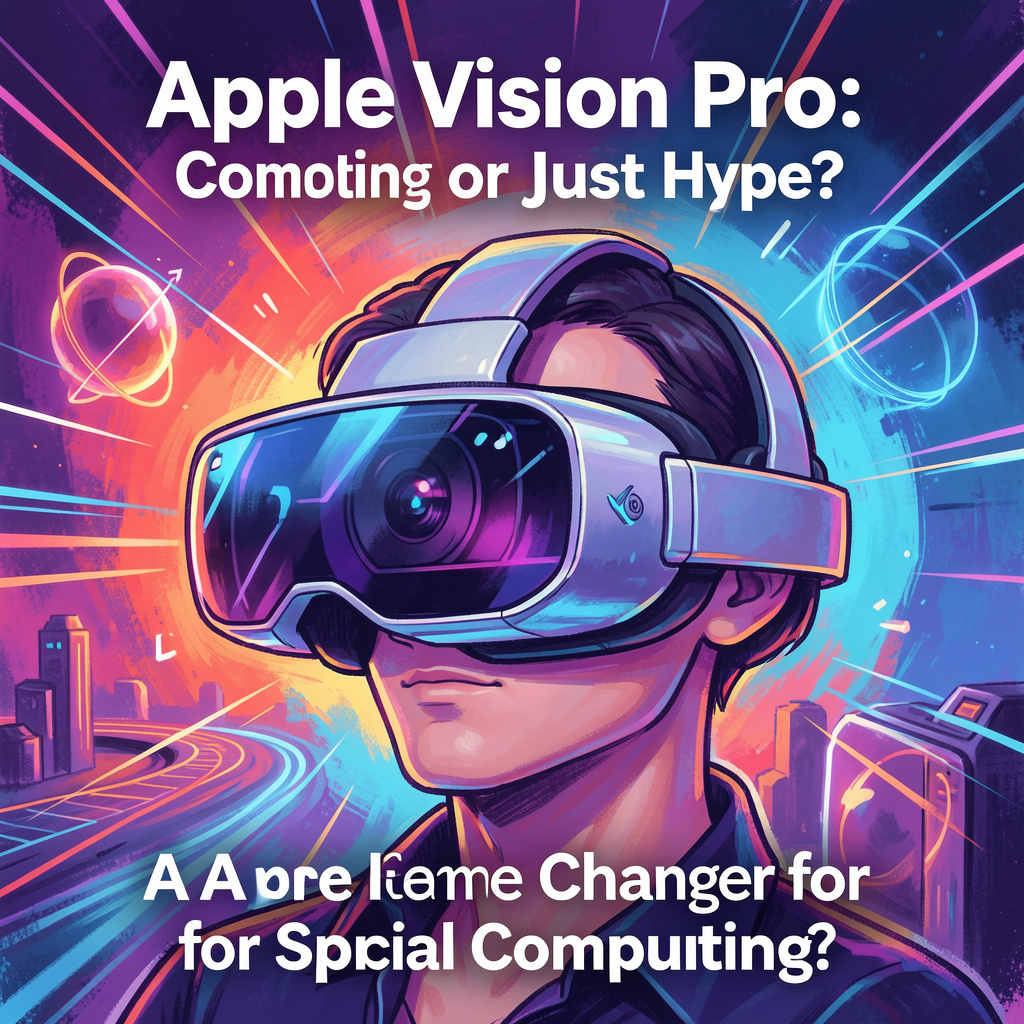
I still remember slipping on a VR headset for the first time back in 2016—a bulky Oculus Rift that had me nearly tripping over my bewildered cat. So when Apple finally pulled back the curtain on the Vision Pro last year, I caught myself thinking: are we actually there yet? The headset looks impossibly sleek, no doubt. But at $3,499, it’s not something you toss into the cart on a whim. Apps hover in your living room like they’ve always belonged there, and a lenticular outer display shows a ghostly rendering of your eyes so people around you don’t feel locked out. It’s strange. It’s gorgeous. And yes, it’s heavy. One detail I rarely see mentioned: this thing tips the scales at over a pound. After half an hour, your neck sends you a very clear memo.
What’s the big idea, anyway?
Spatial computing isn’t exactly a fresh concept—Microsoft’s HoloLens has been shuffling around since 2016, remember? But Apple’s take feels fundamentally different. They’re not just strapping a display to your face; they’re weaving digital layers into your actual surroundings so fluidly that you might genuinely forget there are goggles resting on your nose. The system follows your gaze and your fingertips, no wands or controllers required. You could pull up a recipe while dicing an onion, or stream a movie on a virtual 100-foot screen while your partner reads quietly next to you. Which brings me to the uncomfortable question: do we actually want a computer parked on our face all day? I’ve watched demos where people tweak spreadsheets suspended in mid-air, and I’m not sold that it’s quicker than a laptop. Maybe that’s just me, but I’d rather clack on real keys than keep pinching empty space.
The hype machine vs. the quiet truth
Apple’s marketing team deserves a standing ovation—those ads showing a dad wearing Vision Pro while his kid’s birthday party swirls around him? Haunting, honestly. But let’s talk about the stuff the ads politely skip. There’s a battery pack tethered by a cord, and it clocks out after roughly two hours. Two. That barely gets you through a feature-length film, never mind a workday. Developers I’ve chatted with are genuinely excited but also walking on eggshells; one told me their app crashed three times during a WWDC 2023 demo. Even so, the magic is hard to dismiss. The eye-tracking is so uncannily accurate it borders on telepathy, and the passthrough video is sharp enough to read texts on your actual phone. So where does that leave us? Is this a plaything for the wealthy or the rough draft of something monumental? I’d argue it’s both. The original iPhone was clunky and absurdly priced, and look at the world now. For most people, though, the Vision Pro won’t be an everyday companion—not yet. It’s a peek over the horizon, a whispered promise. And maybe, for now, that’s plenty.