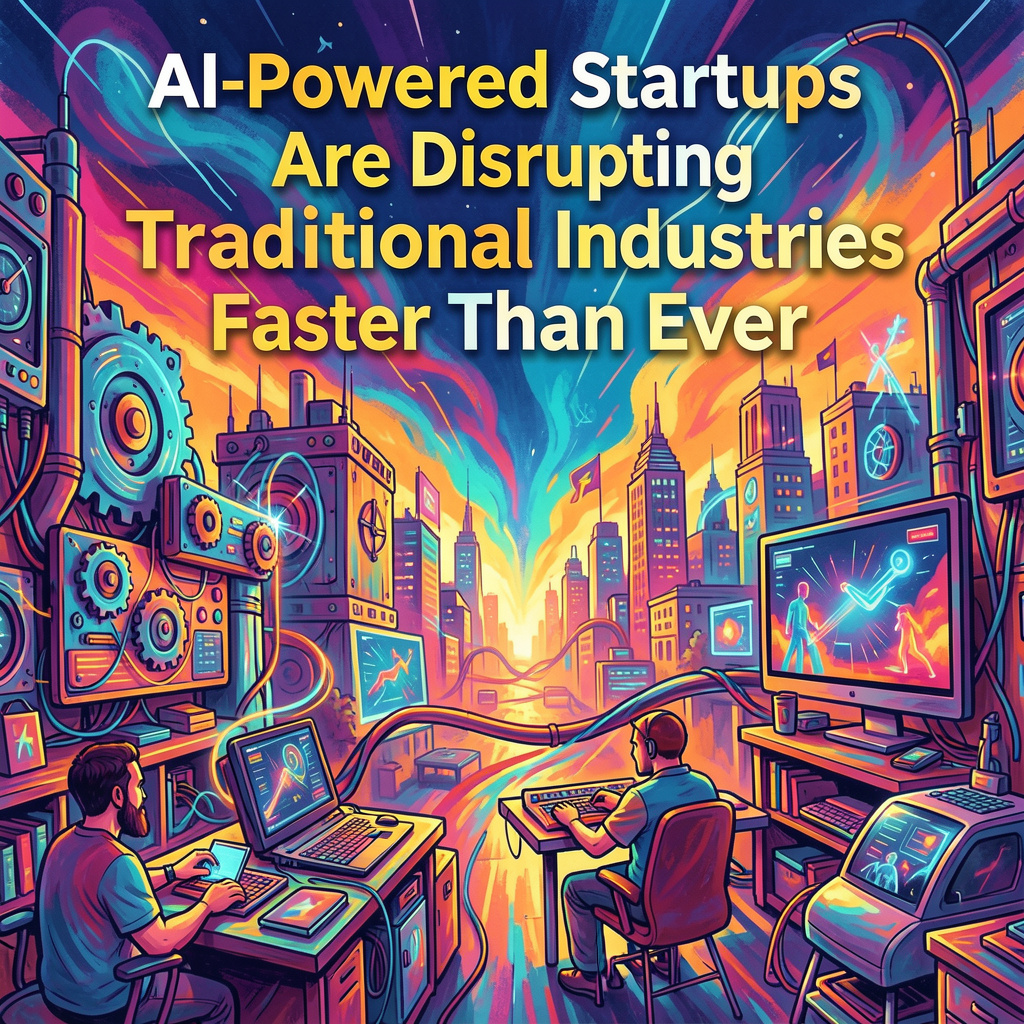
AI-Powered Startups Are Disrupting Traditional Industries Faster Than Ever
The quiet invasion
You might not notice it. But it’s happening. Last week, I watched a bakery in my neighborhood switch to an AI system that predicts exactly how many croissants to bake each morning. Waste dropped 30% in a month. That’s not a tech giant—it’s a family-run shop with flour-dusted aprons and a laptop in the back. Startups are slipping into the cracks of old industries, armed with algorithms and a hunger to fix what’s broken. They don’t make headlines like the big players. Yet they’re the ones reshaping how we farm, how we heal, how we build. And honestly, I find this part often gets ignored: it’s the small, unglamorous changes that stick.
Why now?
Think about the last time you called customer service. Was it a human? Maybe not. In 2023, a little-known startup called PolyAI handled over 10 million calls for companies like FedEx and Marriott, using voice AI that sounds eerily natural. But here’s the twist: they’re not replacing humans entirely. They’re handling the boring stuff—password resets, order tracking—so people can tackle the messy, emotional problems. So why are these startups moving so fast? Because the tools have become stupidly cheap. Cloud computing, pre-trained models, APIs you can plug in over a weekend. A decade ago, you’d need a PhD and a million dollars. Now? A couple of smart founders and a credit card. But does speed always mean better? That’s the question nagging at me. Sometimes, when you move fast, you break things that shouldn’t be broken—like trust, or privacy, or the local diner’s secret sauce recipe that an AI suddenly knows by heart. I’ve watched that happen more than once, and it never sits right.
The human blind spot
We obsess over the tech. The shiny demos. The funding rounds. But here’s what I’ve seen go wrong: startups parachute into an industry they don’t understand, optimize one metric, and accidentally gut the soul of a business. A friend who runs a small bookstore told me an AI inventory tool suggested she stop stocking poetry because it “underperformed.” She ignored it, of course. But a larger chain might not. The real disruption isn’t in the code—it’s in the choices. Which problems do we automate? Which do we leave messy and human? There’s a healthcare startup in Nairobi, for instance, using AI to triage patients in rural clinics. They didn’t just build a chatbot. They spent months sitting with nurses, learning why they trust certain diagnoses over others. That’s the difference between disruption that heals and disruption that breaks. So, can a startup truly disrupt without understanding the people it serves? I’m not sure it can. Not for long.
What comes next
We’re in the messy middle. The hype is fading, and the real work is starting. You’ll see more startups like the one helping farmers in India detect crop diseases from a smartphone photo—over 50,000 farmers used it last season, and yields jumped 20% in some areas. That’s not a headline-grabber. It’s a quiet revolution. And it’s happening in law firms, construction sites, and yes, your local bakery. The startups that last won’t be the ones with the fanciest AI. They’ll be the ones who remember that industries are made of people—stubborn, creative, unpredictable people. And honestly? That’s the part I’m most excited to watch.