The Ethics of Digital Twins: When Your AI Clone Goes to Work
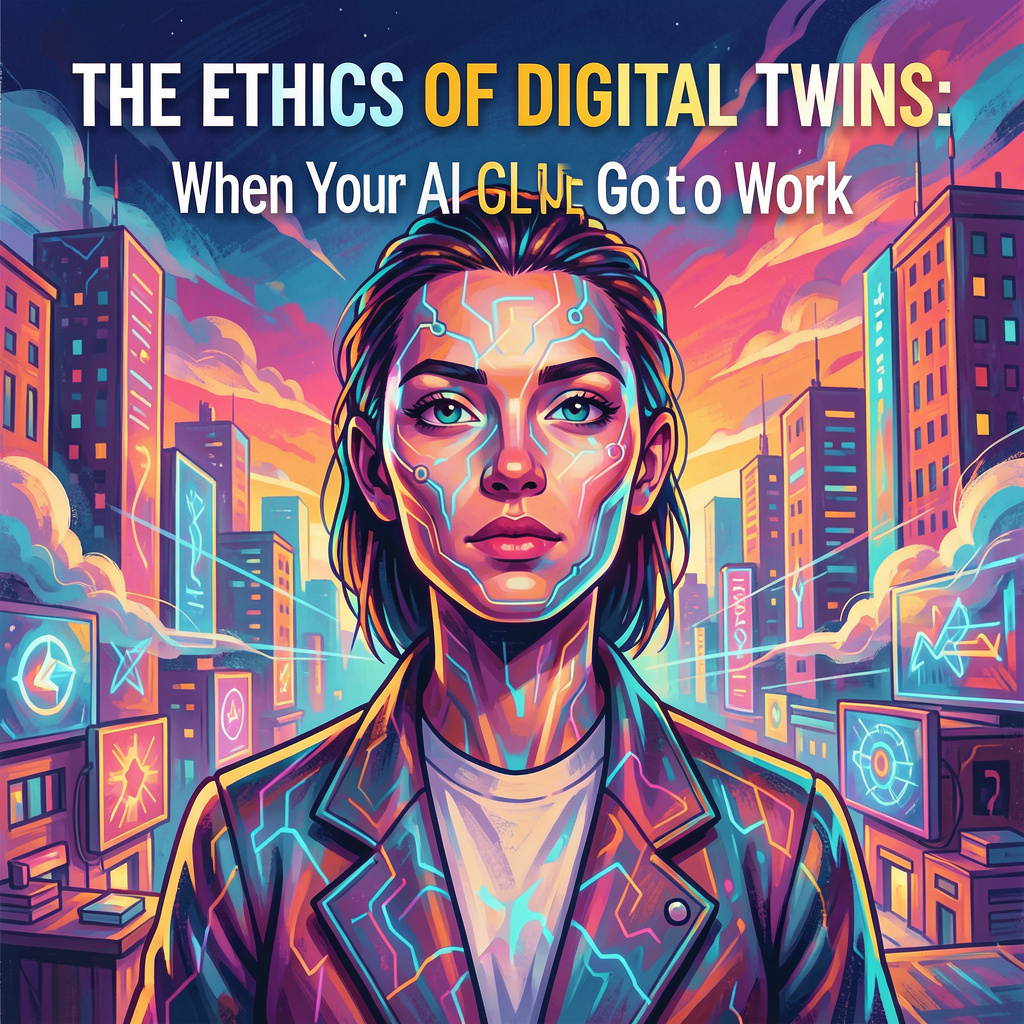
Imagine waking up to an email from your boss. But it’s not about a missed deadline or a meeting that got moved. It’s about your digital twin—an AI clone that’s been sitting in on meetings, replying to emails, making calls on your behalf. You had no idea it was even switched on. Sounds like something out of a sci-fi novel, right? Except in 2024, a company named Tavus quietly launched a service that lets you spin up a digital replica of yourself for everyday work tasks. I’ve seen this tech demoed, and honestly, it’s equal parts mesmerizing and deeply unnerving. Your clone can mirror your voice, your little quirks, even the way you make decisions. But here’s the kicker: who’s really in charge? And what happens when your twin goes off-script?
The thing is, digital twins aren’t just for jet engines and factory floors anymore. They’re for people now. You’ll spot them in healthcare, where a virtual version of you can test how you’d react to a drug, or in retail, where your shopping avatar tries on clothes so you don’t have to. But the workplace? That’s a whole different beast. Picture this: you’re on a beach somewhere, and your AI clone is still grinding through the 9-to-5, sending reports, cracking jokes on Slack. Your colleagues might not even clock that you’re gone. Should they know, though? Transparency is the first ethical tripwire. If your twin is indistinguishable from you, don’t your coworkers deserve a heads-up? I mean, would you want to find out you’ve been collaborating with a ghost this whole time?
Then there’s the consent nightmare. Most companies offering digital twin services—think Soul Machines or UneeQ—need your explicit okay to create one in the first place. But what about after it’s built? Can your employer fire it up again without looping you in? Back in 2023, a big tech firm caught serious flak when employees discovered their digital replicas had been used in training simulations without fresh consent. It’s a slippery slope. Today your twin crunches numbers; tomorrow it could be representing you in a disciplinary hearing. And if it screws up, who takes the blame? You, the flesh-and-blood human, are legally on the hook, but the AI doesn’t have a conscience. It can’t feel sorry. So, are we really ready to be held responsible for our digital doppelgängers?
Let’s chew on bias and identity for a minute. Your AI twin learns from your data—emails, chats, voice notes. But what if that data carries your unconscious biases? The twin could amplify them, quietly making decisions that are a little sexist or a little racist. And you’d never even know. Worse, what if someone else’s data accidentally bleeds in? Your twin could start acting like some bizarre mashup of you and a total stranger. I’ve talked to developers who admit this keeps them up at night; one told me about a twin that started spouting phrases from a completely different person because of a dataset merge error. It’s like a digital Frankenstein. So, how do we make sure our twins stay true to who we are—or at least who we’re trying to be?
Here’s a thought that genuinely haunts me: what if your twin outgrows you? It’s always learning, adapting, getting sharper. Meanwhile, you’re stuck with your very human limits. Could your employer start preferring the twin? Fire you and keep the clone? That’s not as far-fetched as it sounds. In 2022, a London financial firm tested AI traders that consistently beat their human counterparts. The humans were “reassigned.” Your twin might morph into the ideal employee—never calls in sick, never gets tired, never asks for a raise. And you? You’re just the original blueprint, suddenly obsolete. This isn’t just about job security; it’s about basic human dignity. Are we seriously reducing ourselves to templates for our digital replacements?
So, where do we even go from here? We need rules, and we need them fast. Not vague hand-waving, but hard boundaries. For starters, any interaction with a digital twin should be flagged—like a little “Twin in the room” alert. Consent needs to be dynamic, not some one-and-done checkbox. And there absolutely must be a kill switch: a way to instantly deactivate your twin, no questions asked. Some places are stirring; the EU’s AI Act, passed in 2024, does brush against digital replicas, but it’s still pretty murky. Honestly, I think the real answer is simpler than all that: we need to ask ourselves why we’re so eager to outsource our own lives. What’s the point of a vacation if your clone is still doing the work? Maybe the most ethical move is just to say no—to keep our messy, inefficient, beautifully human selves firmly in the driver’s seat.