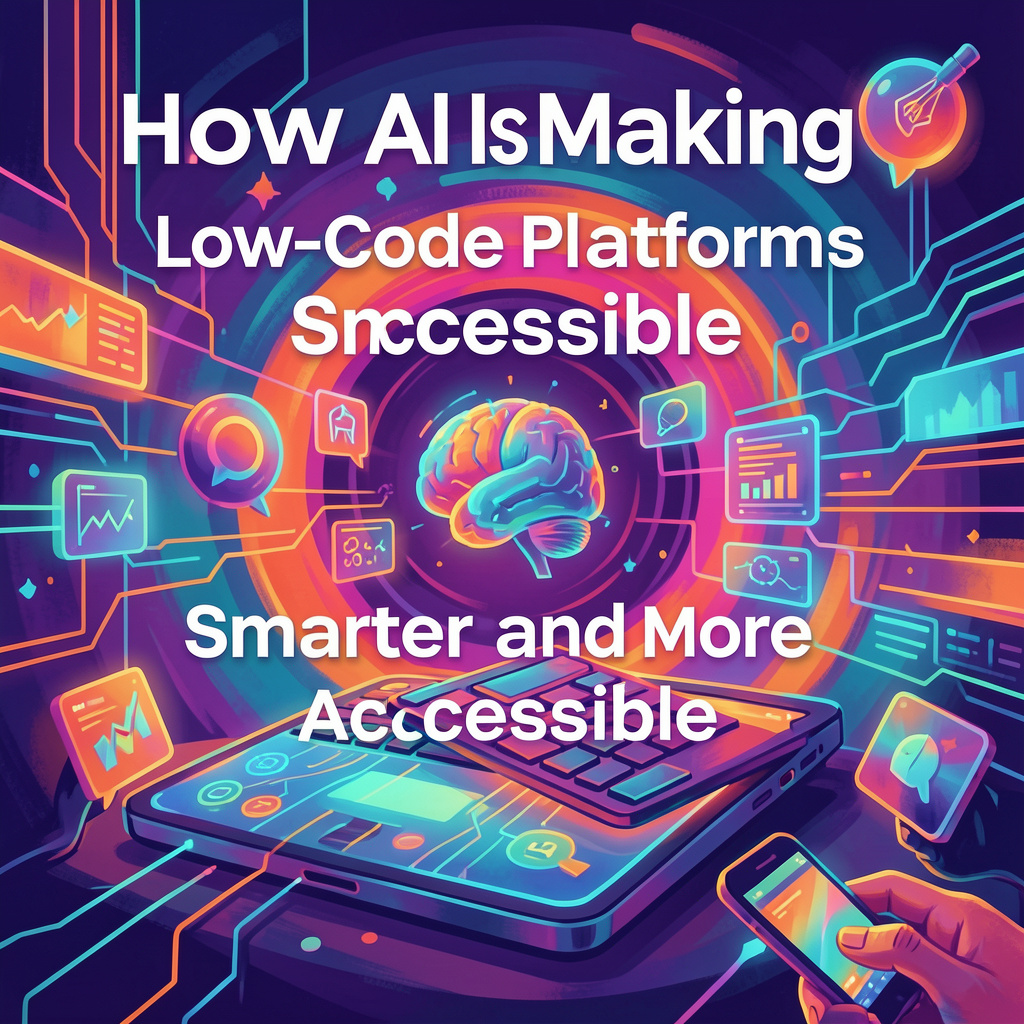
How AI Is Making Low-Code Platforms Smarter and More Accessible
Last Tuesday, I watched a marketing manager build a customer portal in 14 minutes flat. She’s never written a line of code. The tool? Microsoft Power Apps, with a new AI feature that turned her rough sketch into a working interface. I’ll be honest, I’ve watched this kind of thing flop before—clunky drag-and-drop tools that overpromise and leave you with a tangled mess. But this time felt different. The AI didn’t just accelerate the process; it seemed to grasp what she was aiming for. Low-code development isn’t new, but AI is nudging it into territory that feels borderline magical. And yet, it’s not magic at all. It’s a quiet shift that’s changing who gets to build software, and how they do it.
What’s Actually Happening Under the Hood?
Low-code platforms let you create apps using visual pieces instead of traditional coding. We’re talking drag-and-drop components, pre-built templates, and straightforward logic flows. Now, AI is getting threaded into these platforms in three main ways. First up, natural language processing lets you describe what you want—something like “a form that collects customer feedback and sends a summary email”—and the AI whips up the basic app structure. Second, machine learning models suggest your next move as you build, kind of like auto-complete on steroids. Third, AI can fine-tune the app after it goes live, catching performance hiccups or security gaps. It’s like having a quiet expert perched beside you, murmuring tips. But here’s the thing that keeps bothering me: if the AI is doing the heavy lifting, are we still the builders, or just the ones pointing?
Consider OutSystems, a big name in this field. They’ve baked in AI that scans your app’s logic and flags potential errors before you even run a test. I chatted with a developer at a logistics company who said it slashed their debugging time by 40%. That’s not a vague promise—40%—from a team that used to burn Fridays chasing glitches. And it’s not only for the pros. A bakery owner in Ohio used Bubble, another low-code platform with AI helpers, to build an inventory tracker. She told me, “I didn’t even know what an API was, but the AI just asked me questions and built it.” That’s the dream, right? Making creation accessible to everyone. But I’ve seen tools that sell simplicity and end up delivering a new flavor of complexity. What’s changed is that AI now learns from millions of builds, so it’s getting sharper at guessing what a user actually needs.
Then there’s the accessibility piece. For ages, low-code meant a trade-off—you got speed but gave up flexibility. AI is flipping that on its head. By generating custom code snippets on the fly, it closes the gap between a simple drag-and-drop surface and the deep customization that seasoned developers want. Mendix, another platform, uses AI to turn natural language into SQL queries. A project manager can type “show me all orders from last month where the customer is in Texas” and see a live data grid pop up. No database know-how needed. It’s a small thing, but it cracks open doors. How many sharp ideas never saw the light of day because the person with the vision couldn’t speak machine? I’ve met dozens of entrepreneurs who knew their domain inside out but slammed into a wall when it came time to build their tool. That wall is getting shorter now.
Let’s not get carried away, though. There’s a real danger that these AI assistants spawn a “black box” problem. When the AI generates a complex workflow and something snaps, who steps in to fix it? A non-technical user might be stranded. That’s why platforms are rolling out “explainability” features—the AI can walk you through the logic it used, in plain English. It’s a move in the right direction, but it’s far from flawless. I find this part gets glossed over in all the excitement. We obsess over the speed and ease, but not over what happens when things go sideways. Still, the trend is hard to ignore. According to Gartner, by 2026, 80% of low-code development tool users will sit outside formal IT departments. That’s a staggering leap from a decade ago, when these tools were niche toys for prototyping.
Will This Finally Close the Tech Skills Gap?
Maybe it will. The tech industry has been hand-wringing about the developer shortage for years. AI-enhanced low-code platforms won’t erase the need for deep technical chops, but they’ll let a whole lot more people solve their own problems. A nurse might piece together a patient-tracking app. A teacher could spin up a quiz platform. The key is that AI is making the interface more conversational. You don’t dig through menus; you just say what you need. It reminds me of the leap from a command line to a smartphone. Most of us don’t want to learn code; we just want to get stuff done. And that’s the real shake-up here—not that AI writes flawless code, but that it listens to imperfect humans.
Plenty of skeptics exist, of course. Some developers fret that these tools will cheapen their skills. I get that. But the more I dig into it, the more I see a pivot in what developers will actually do. Instead of cranking out the same login form for the hundredth time, they’ll tackle the thorny bits—architecture, security, integration. The AI handles the boilerplate. It’s a collaboration, not a coup. And for the rest of us, it’s an open door. An invitation to quit waiting for someone else to build the tool we need and just build it ourselves. That bakery owner in Ohio? Her tracker now syncs with her supplier’s system. She didn’t hire a consultant. She just asked the AI.
So where does this leave us? In a world where the wall between idea and app is thinner than it’s ever been. It’s not flawless, and it won’t fit every project. But for the first time, the question isn’t “Can you code?” It’s “What do you want to create?” And that’s a pretty fundamental change.