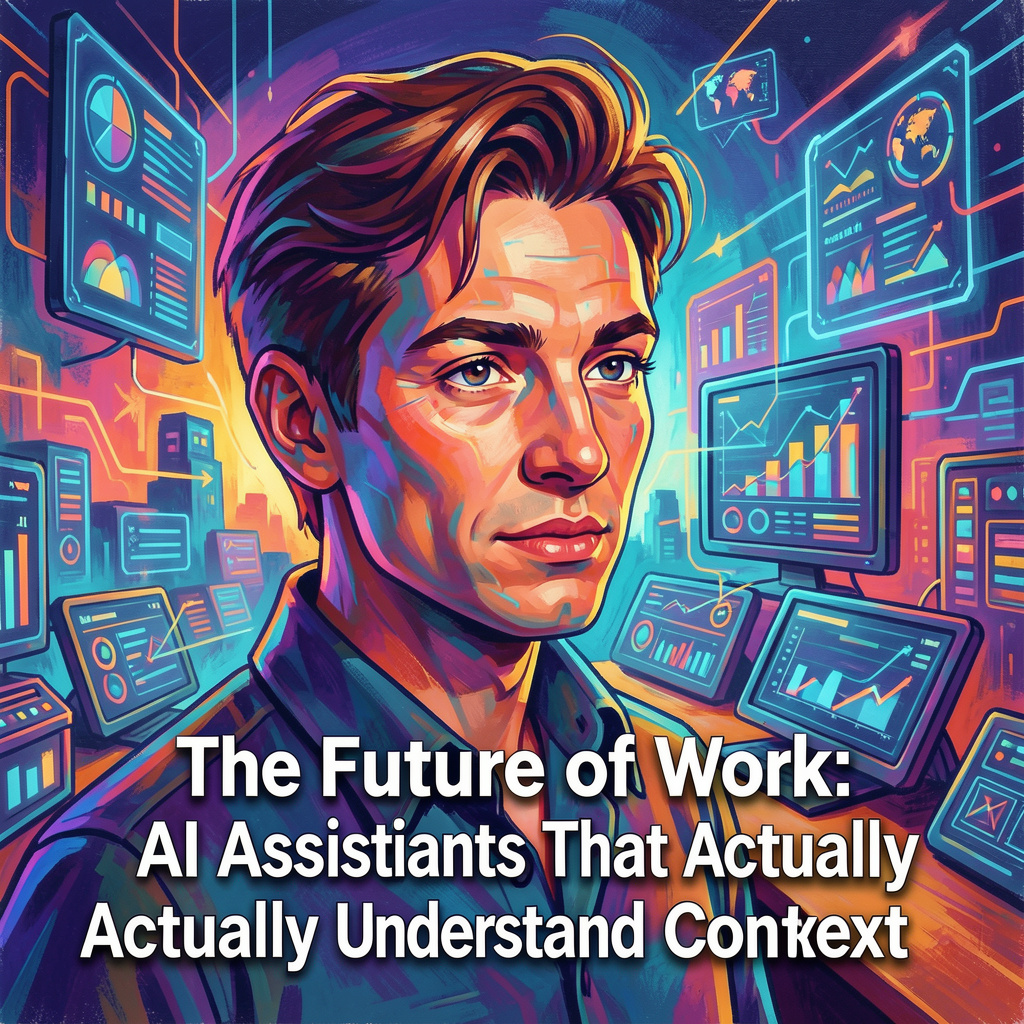
The Future of Work: AI Assistants That Actually Understand Context
Picture this: you’re in a meeting, and your AI assistant chimes in with a summary of the last three emails, the client’s mood from their latest message, and a gentle reminder that your boss hates when you’re late with reports. It’s not 2030. It’s happening now, in bits and pieces, across tools you might already use. I’ve been tracking this shift for a while, and honestly, the speed is dizzying.
But here’s the thing—most of us still think of AI as a glorified search bar. That’s changing fast. We’re moving toward assistants that don’t just hear words; they grasp the whole messy, human context behind them. I remember the first time a chatbot actually picked up on my sarcasm in a test run—it felt like a small but weirdly intimate breakthrough.
The tools are stitching together signals we barely notice ourselves: tone, timing, even the pauses between sentences. They’re learning that a “fine” from a colleague at 11 p.m. isn’t the same as a “fine” at 11 a.m. This isn’t about fancier algorithms alone. It’s about systems finally starting to mirror how we actually communicate—with subtext, fatigue, and all the unspoken stuff that makes human interaction so tricky to replicate.